
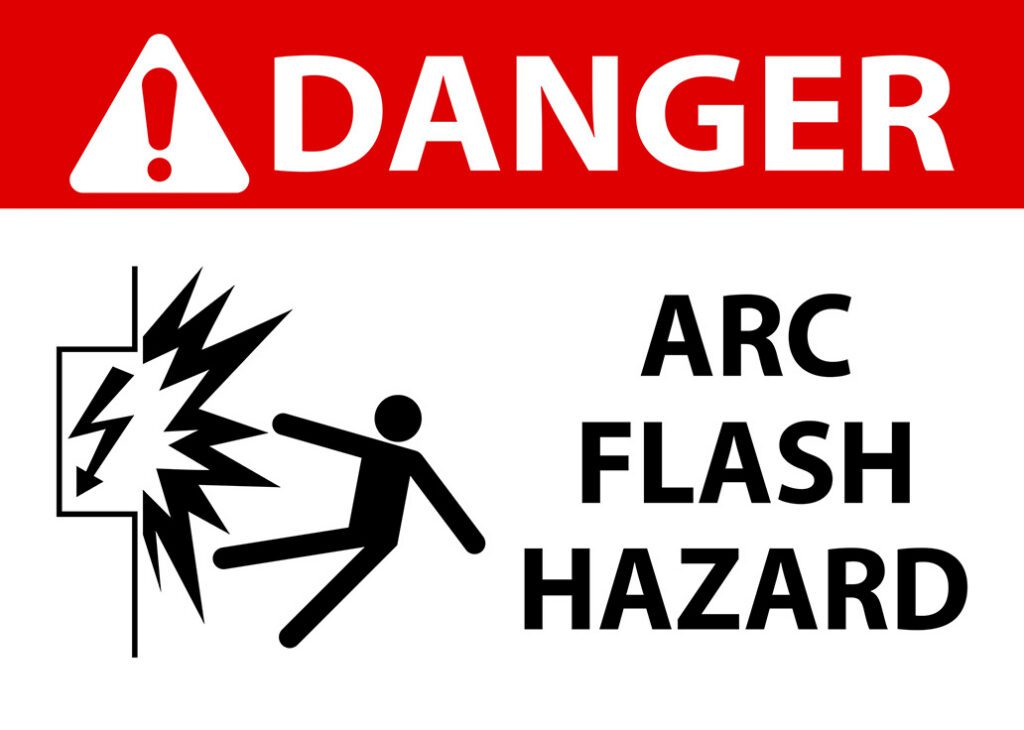
An electrician was removing wiring from a fan motor in an overhead crane, a routine procedure. But when an ungrounded electrical conductor touched a grounded surface, it sparked an arc flash. She suffered third degree burns on her hand and first-degree burns on her face.
That incident highlights the dangers of arc flash and the importance of having safety protocols in place.
An arc flash happens when a flashover of electrical current leaves its intended path and travels through the air to the ground or to another conductor. When that happens, the results can be devastating, even deadly. Even the most experienced worker or electrician is at risk. According to the Fire Protection Research Foundation, an estimated five to ten arc flash incidents occur in electrical equipment in the United States each day.
Triggers range from dust and particulates in the air to dropped tools, material failure, and condensation or humidity. Accidental touching of conductors, faulty installations, and corrosion can also lead to an arc flash. The consequences can be as violent as flying molten metal, blast pressure, sound blasts, extreme heat, and burns. Fire may result.
Many workers and business owners do not fully understand arc flash and its potential consequences. Arc flash is often preventable, or, at the very least, its impact can be minimized. At A.I.M. Mutual, we encourage employers to conduct a hazard analysis and implement safe work practices at each job site. While quality safety gear is always recommended, it is no guarantee of worker safety.
For maximum protection, a combination of safety measures works best. They include de-energizing the circuit whenever possible and ensuring proper training and protective equipment for all personnel. At a minimum, employees need the skills to distinguish exposed live parts, determine nominal voltage of live parts, and understand clearance distances. Finally, equipment protections should be in place, including insulation, barricades, guarding, secondary protection through grounding, and ground fault circuit interrupters.
Annual training should be considered a “best practice” for a safer workplace. A comprehensive arc flash program can reduce the likelihood and severity of an arc flash incident at your workplace.